wirelessaudiotour

Loading

26 9 月
Why Every Factory Tour Needs a Reliable Wireless Communication System

Why Every Factory Tour Needs a Reliable Wireless Communication System

Factory tours are an important part of modern business.

Manufacturers use factory visits to introduce customers to their production capabilities, demonstrate quality control, train employees, and build confidence with international buyers.

However, factories are not designed for quiet communication.

Production equipment, compressors, motors, packaging machines, forklifts, ventilation systems, and other industrial equipment can create a challenging acoustic environment.

For this reason, a wireless factory tour communication system can be an important part of a professional visitor experience.

The Communication Problem Inside a Factory

Imagine a group of twenty visitors standing beside an active production line.

The guide begins explaining the production process.

Visitors at the front can hear the explanation.

Visitors at the back hear only parts of it.

The guide raises their voice.

The group moves closer.

Production noise continues.

The result is an inefficient and uncomfortable experience.

A wireless communication system changes this situation by delivering the guide’s voice directly to each visitor.

How a Factory Tour Guide System Works

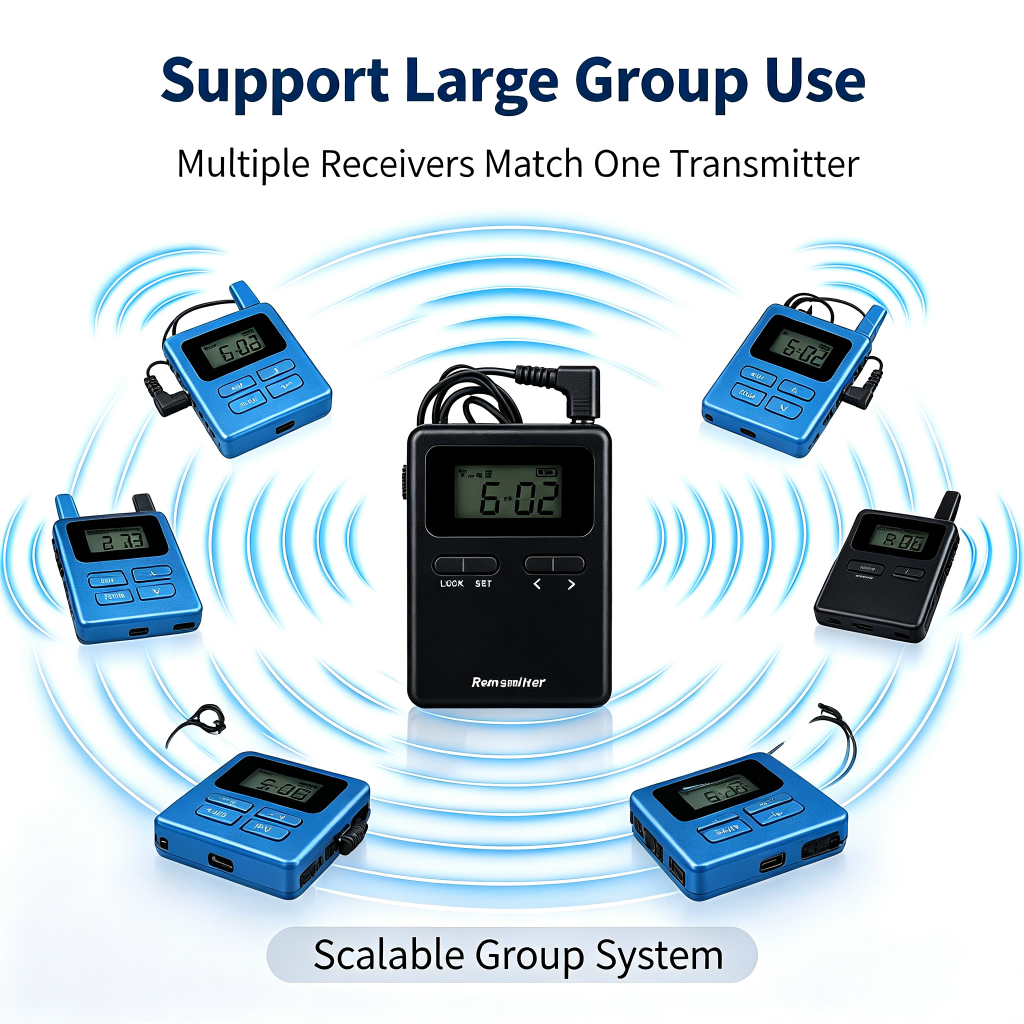
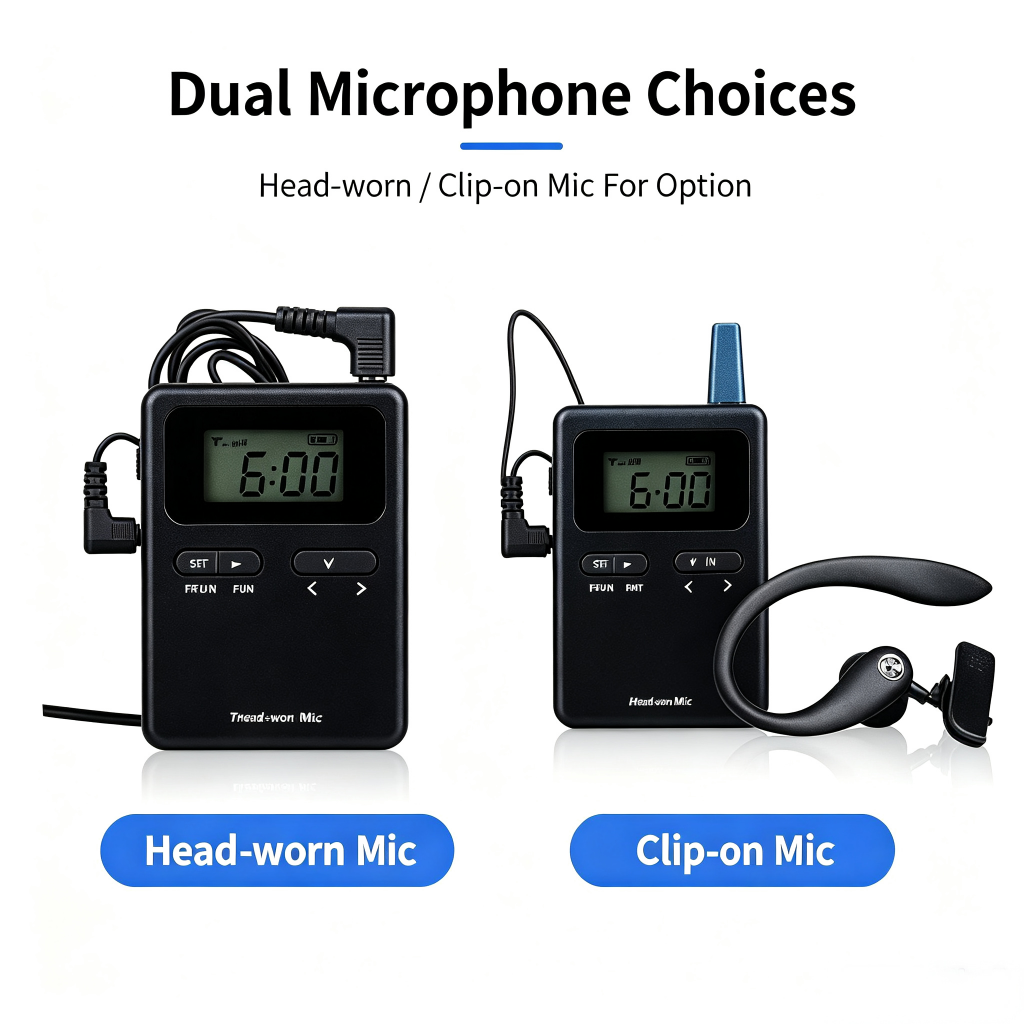
The guide uses a wireless transmitter and microphone.

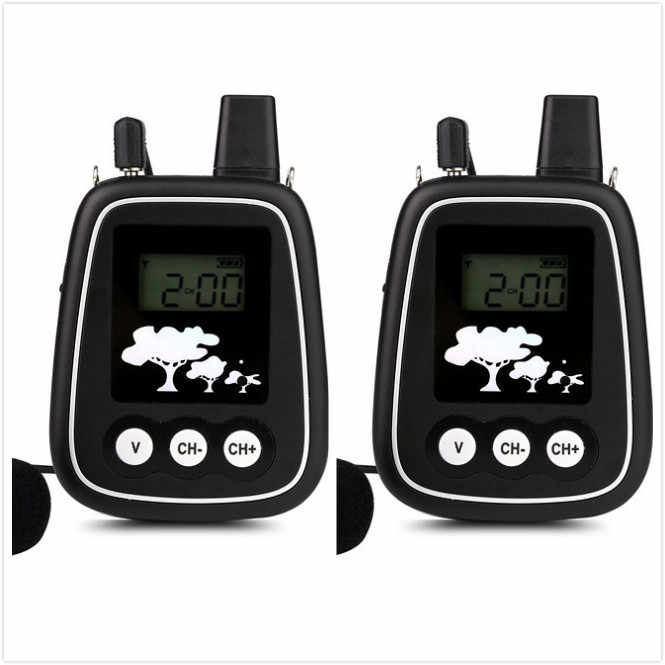
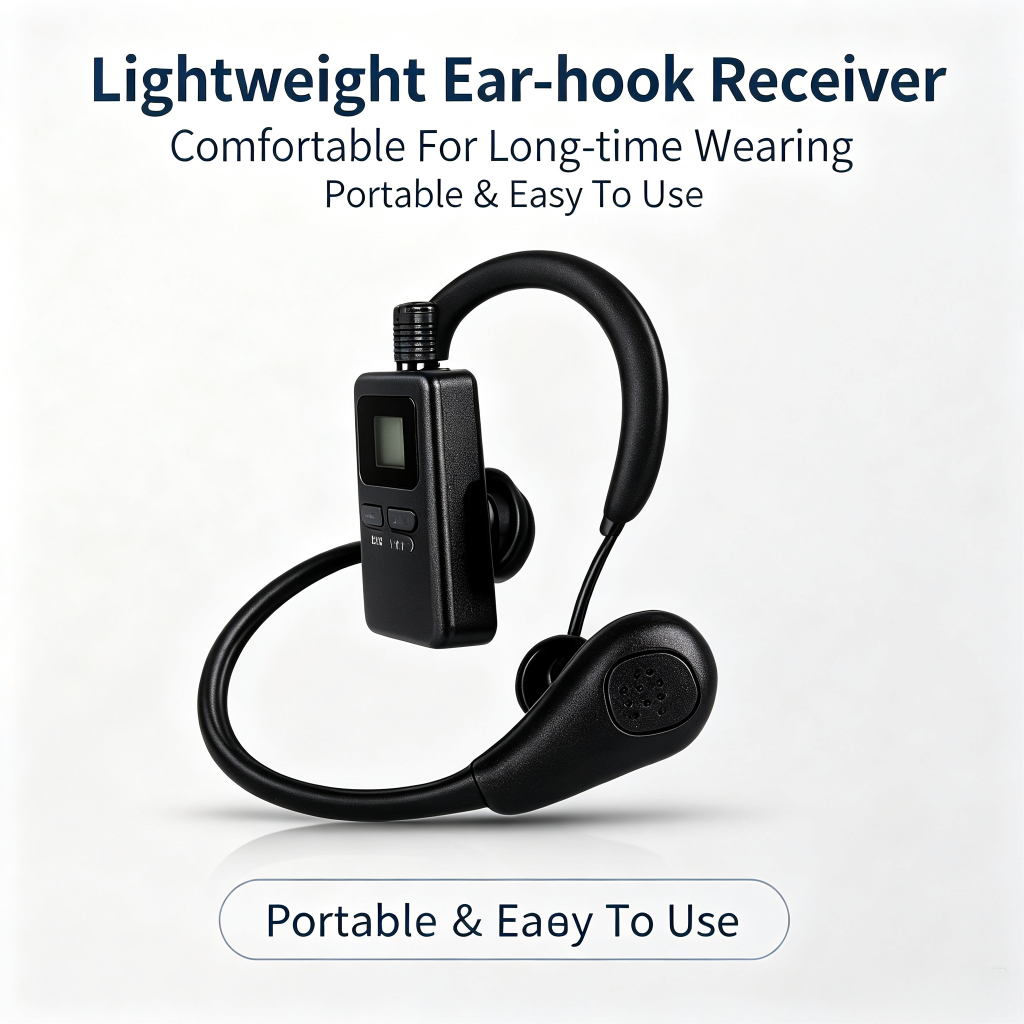
Each visitor receives a portable receiver and earphone.

The guide’s voice is transmitted directly to the receivers.

This allows visitors to listen clearly while maintaining a safe and comfortable distance.

The group can continue walking through different production areas without stopping repeatedly for communication.

Benefits for International Customers

Factory visits are particularly important in international trade.

Overseas customers may travel long distances to inspect a supplier’s production capabilities.

The factory tour often influences the customer’s perception of:

  • Production capacity
  • Professionalism
  • Quality management
  • Organization
  • Technology
  • Employee training

Clear communication helps the factory present this information effectively.

A professional wireless tour system can therefore support not only communication, but also the overall image of the company.

Important Features for Industrial Environments

Not every communication system is equally suitable for factory applications.

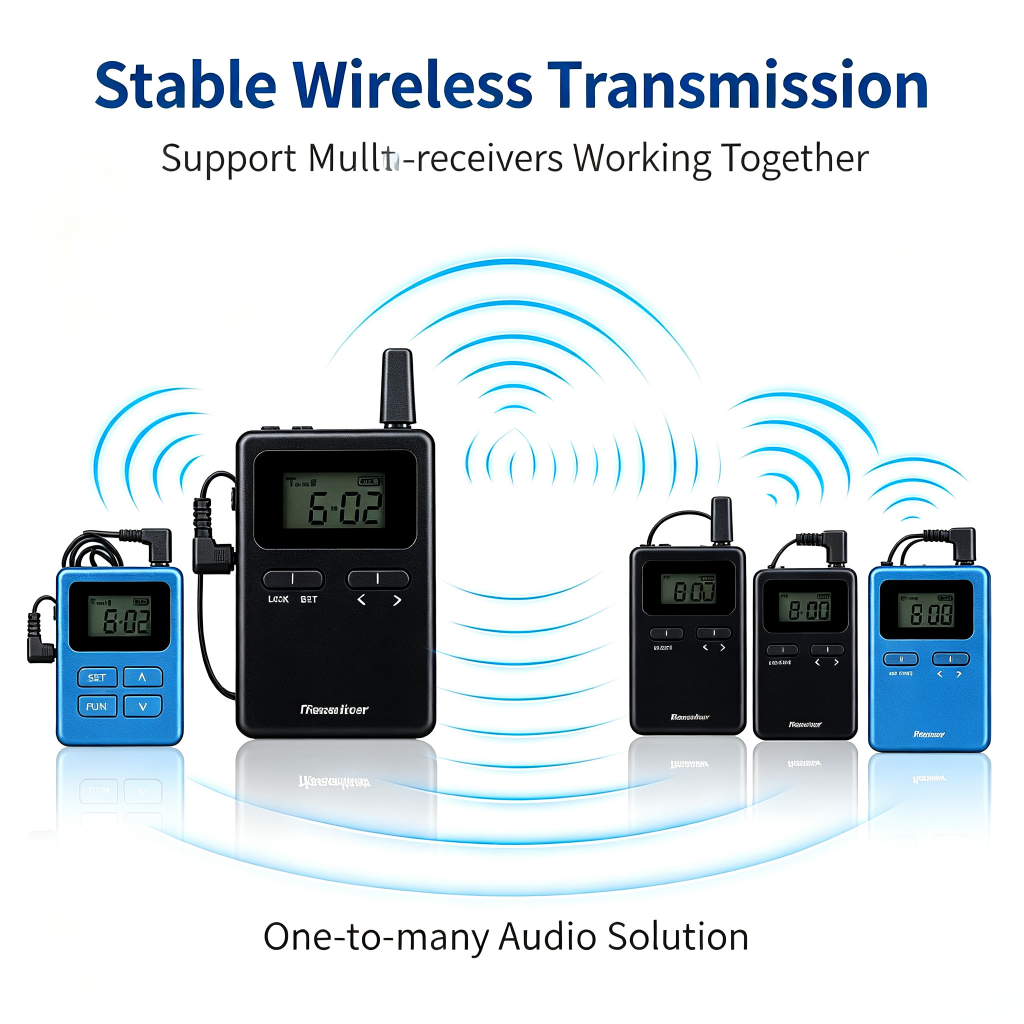
Strong and Stable Signal

Factories may contain metal structures, machinery, and other potential sources of interference.

A reliable transmission system is important.

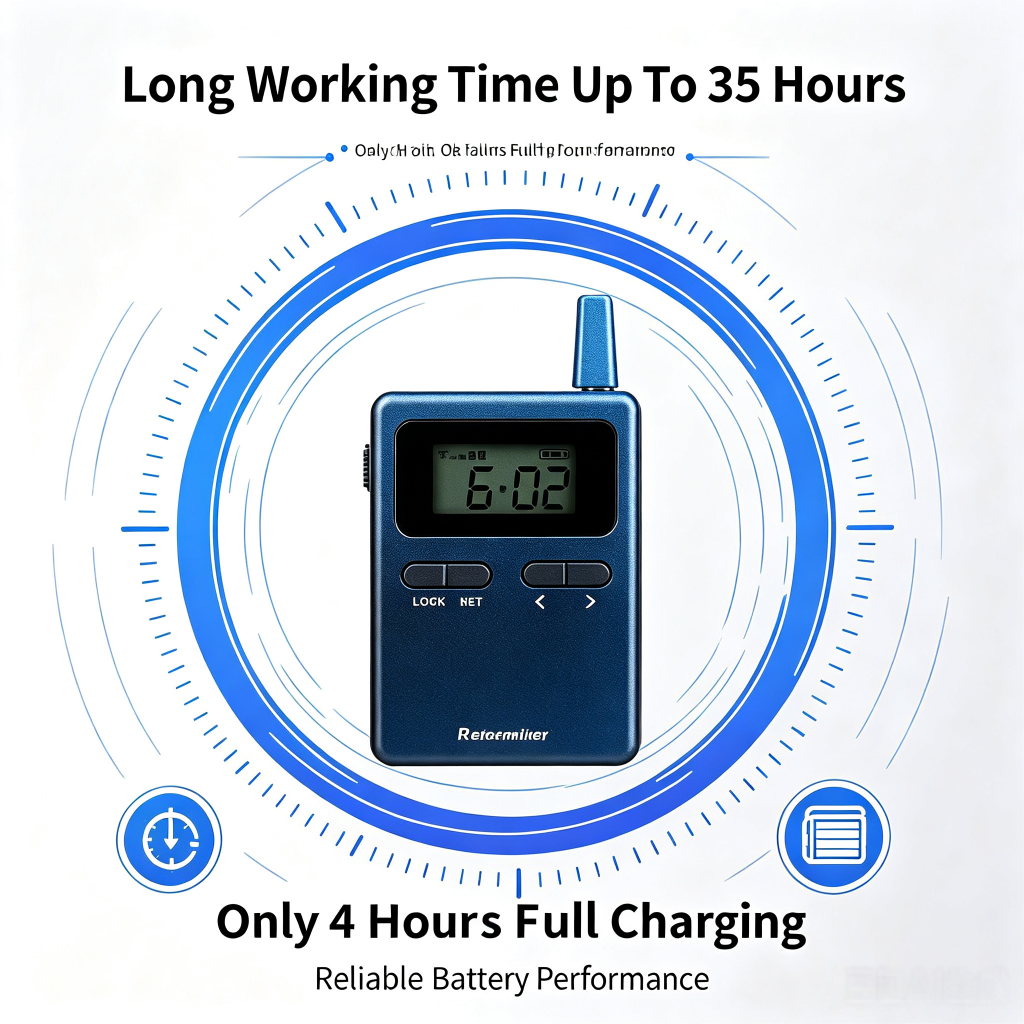
Long Battery Life

Factory visits can last several hours, especially when they include presentations, production tours, quality inspections, and meetings.

Comfortable Equipment

Visitors may wear the equipment for an extended period.

Receivers and earphones should therefore be lightweight and easy to use.

Easy Group Management

The system should allow staff to prepare equipment quickly before visitors arrive.

Charging cases and organized storage solutions can improve efficiency.

Multiple Groups

Large factories may host several groups at the same time.

Multiple channels can help separate communication between different groups.

Beyond Customer Visits

Factory communication systems can also be used for:

  • Employee training
  • Safety briefings
  • New employee orientation
  • University visits
  • Government inspections
  • Supplier visits
  • Dealer training
  • Equipment demonstrations

This makes the system a flexible communication tool rather than equipment used only for customer tours.

Conclusion

A factory tour should help visitors understand how a company operates.

If visitors cannot hear the explanation, important information may be lost.

A wireless factory tour communication system helps create clearer communication, better organization, and a more professional visitor experience.

For manufacturers that regularly receive customers, partners, trainees, or inspection teams, investing in reliable tour communication equipment can improve both operational efficiency and corporate presentation.
21 9 月
Wireless Interpretation Systems for International Tours and Events

Wireless Interpretation Systems for International Tours and Events

International communication creates additional challenges for guided tours.

A factory may receive visitors from Europe, North America, the Middle East, and Asia.

An international conference may include participants who speak several different languages.

A tourist attraction may welcome visitors from around the world.

In these situations, a standard tour guide system may not be enough.

A wireless interpretation system can help deliver translated communication to different groups.

What Is a Wireless Interpretation System?

A wireless interpretation system allows an interpreter to listen to the original speaker and transmit a translated version to participants.

Depending on the system configuration, different languages may operate on separate channels.

Participants select the language channel they need.

For example:

Channel 1: English

Channel 2: Spanish

Channel 3: French

Channel 4: Chinese

The speaker can continue the presentation while interpreters provide real-time translation.

Where Are Interpretation Systems Used?

Wireless interpretation systems can be used for:

  • International factory visits
  • Conferences
  • Business meetings
  • Government delegations
  • Trade exhibitions
  • Training programs
  • Academic visits
  • Religious events
  • International tourism

Why Wireless Interpretation Is Useful

Traditional interpretation can interrupt the flow of a presentation.

The speaker talks.

The interpreter repeats the message.

The process continues.

Wireless simultaneous or assisted interpretation can create a more efficient communication experience by allowing participants to listen through personal receivers.

Multilingual Communication in Cultural Institutions

Major museums demonstrate the importance of multilingual communication.

The British Museum’s audio experience supports multiple languages, and Louvre Abu Dhabi offers audio content in English, Arabic, French, Mandarin, Russian, German, and Hindi.

UNESCO documentation on memorial-site audio guides also describes multilingual audio experiences supporting a wide range of visitor languages.

These examples show that language accessibility is increasingly important for international audiences.

Important Features to Consider

When selecting a wireless interpretation system, consider:

Number of Language Channels

The system should support the required number of simultaneous languages.

Audio Clarity

Participants need to clearly understand the interpreter.

Channel Switching

Receivers should allow users to easily select the required language.

Battery Performance

Long events require reliable battery operation.

Scalability

Organizations may need to expand the number of receivers for larger events.

Conclusion

Language should not become a barrier to communication.

A wireless interpretation system can help organizations communicate more effectively with international audiences.

Whether used for a factory visit, conference, training session, or guided tour, the right system can create a clearer and more inclusive experience for participants from different countries and language backgrounds.

20 9 月
How to Manage Large Tour Groups Without Losing Communication

How to Manage Large Tour Groups Without Losing Communication

Managing a large group is one of the biggest challenges for professional tour operators.

The larger the group becomes, the more difficult communication can be.

Visitors may stand at different distances from the guide. Some may stop to take photographs. Others may be distracted by surrounding activities. In busy locations, several tour groups may be speaking at the same time.

A wireless tour guide system can help solve these challenges.

The Limits of Traditional Group Communication

Without a communication system, large groups usually depend on the guide’s natural voice.

This creates several problems.

The guide must speak loudly.

Visitors need to remain close together.

People at the back may miss important information.

Background noise can interrupt communication.

The guide may become tired after speaking loudly for long periods.

These challenges become more serious when groups include 20, 30, 50, or more participants.

How Wireless Communication Improves Group Management

A wireless system gives each participant a personal receiver.

The guide speaks into a microphone, and the audio is transmitted directly to the group.

This creates a more controlled communication environment.

Visitors do not need to stand immediately beside the guide.

The group can spread out naturally while remaining connected.

The guide can provide explanations while walking.

The result is a more flexible and professional tour experience.

Multiple Groups in the Same Location

Large attractions often host several groups simultaneously.

Without organized communication, the voices of different guides can overlap.

Wireless systems with multiple channels can help separate groups.

Each guide and their participants can operate on an independent channel.

This is useful for:

  • Museums
  • Trade shows
  • Tourist attractions
  • Universities
  • Large factories
  • Conferences
  • Industrial parks

Case Example: Multilingual Visitor Experiences

Large cultural institutions often serve international visitors and therefore need flexible communication solutions.

The British Museum provides audio content in multiple languages, while Louvre Abu Dhabi also offers multilingual audio-guide experiences.

The lesson for tour operators is clear: different visitors may require different communication formats.

For a live group, this may involve different guides, separate channels, or interpretation solutions.

Best Practices for Managing Large Groups

Prepare Equipment Before the Tour

Receivers should be charged and checked before participants arrive.

Number the Devices

Numbering transmitters and receivers can make distribution and collection easier.

Use a Simple Channel System

Staff should clearly understand which channel belongs to each group.

Provide Quick Instructions

Visitors should receive simple instructions on how to turn on the receiver and adjust the volume.

Keep Spare Equipment Available

Extra receivers and earphones can help solve unexpected equipment problems.

Conclusion

Large groups do not need to mean poor communication.

With the right wireless tour guide system, organizers can improve audio clarity, reduce stress on guides, and create a better experience for participants.

The key is choosing equipment that matches the group size, operating environment, and communication requirements.

18 9 月
How to Choose the Right Wireless Tour Guide System

How to Choose the Right Wireless Tour Guide System

Choosing a wireless tour guide system may seem simple.

One transmitter sends audio, and multiple receivers receive it.

However, different applications have very different requirements.

A system designed for a small museum tour may not be ideal for a noisy factory or a large outdoor attraction.

Before purchasing equipment, organizations should evaluate several important factors.

1. Where Will the System Be Used?

The operating environment should be the first consideration.

Indoor Applications

Examples include:

  • Museums
  • Galleries
  • Corporate offices
  • Exhibition centers
  • Universities

These environments may require compact equipment and controlled communication.

Outdoor Applications

Examples include:

  • Tourist attractions
  • Theme parks
  • Historical sites
  • Outdoor exhibitions

Outdoor environments may require longer transmission distances and stable performance.

Industrial Applications

Factories and production facilities may require strong communication performance in noisy environments.

2. How Large Is the Group?

A small group of ten visitors has different requirements from a group of one hundred.

Buyers should consider:

  • Average group size
  • Maximum group size
  • Number of simultaneous groups
  • Future expansion requirements

Choosing a scalable system can reduce the need to replace equipment as the organization grows.

3. How Long Will the Equipment Be Used?

Battery life is extremely important.

A short museum tour may last one hour.

A factory visit may include a presentation, lunch, production tour, and business meeting lasting an entire day.

Rechargeable systems can simplify equipment management and reduce the need for disposable batteries.

4. Does the System Need Multiple Channels?

Multiple channels can be useful when several groups operate in the same location.

They can also support interpretation applications.

Before purchasing, organizations should estimate the number of simultaneous communication channels required.

5. Is Ease of Use Important?

For public tours, the answer is almost always yes.

Participants may include:

  • Children
  • Elderly visitors
  • International customers
  • First-time users

Simple controls can significantly improve the user experience.

6. Consider Charging and Storage

Large numbers of receivers can become difficult to manage.

Charging cases or multi-device charging stations can help staff organize equipment efficiently.

This is particularly useful for museums, tour companies, and factories that operate tours every day.

7. Consider Hygiene and Earphone Management

Organizations should also develop a plan for:

  • Cleaning reusable equipment
  • Providing disposable earphones
  • Storing accessories
  • Replacing damaged items

This operational detail can have a major impact on visitor satisfaction.

A Practical Selection Checklist

Before purchasing, ask:

  • What is the typical group size?
  • Will the system be used indoors or outdoors?
  • Is the environment noisy?
  • How many simultaneous groups are expected?
  • Is interpretation required?
  • How many hours of battery life are needed?
  • Does the equipment need to be expanded later?
  • How will the devices be charged and stored?

Conclusion

There is no single wireless tour guide system that is perfect for every application.

The best solution depends on the environment, group size, communication requirements, and operational workflow.

By understanding these factors before purchasing, organizations can select a system that provides better performance, easier management, and a more professional experience for both guides and visitors.

10 9 月
Whisper Systems: The Smart Solution for Quiet and Crowded Environments

Whisper Systems: The Smart Solution for Quiet and Crowded Environments

Not every guided tour takes place in an environment where a speaker can raise their voice.

Museums, art galleries, churches, exhibitions, libraries, and corporate facilities often require quiet communication.

In these situations, a whisper system provides a practical solution.

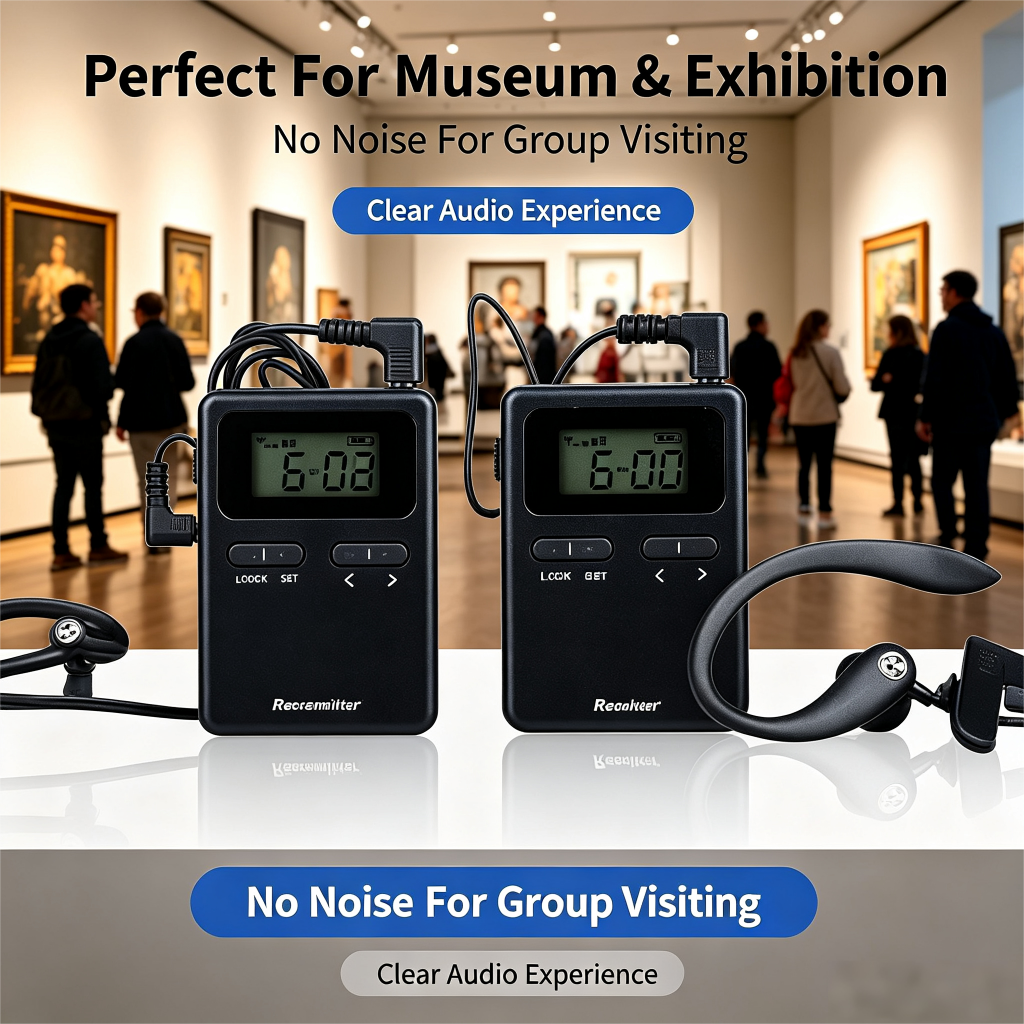
A whisper system allows a guide to speak into a microphone while participants listen through personal receivers and earphones.

The guide can communicate clearly without disturbing the surrounding environment.

What Is a Whisper System?

The term “whisper system” is commonly used to describe a portable wireless communication system designed for guided groups.

The system usually includes:

  • A wireless transmitter
  • A microphone
  • Individual receivers
  • Earphones or headsets

The guide speaks normally into the microphone.

Participants receive the audio directly through their receivers.

The system creates the effect of a private communication channel between the guide and the group.

Why Quiet Communication Matters

In cultural institutions, noise can affect the experience of other visitors.

Several tour groups speaking loudly in the same gallery can quickly create confusion.

A whisper system allows multiple groups to operate with less disruption.

The same principle can be applied to:

  • Art exhibitions
  • Religious buildings
  • Corporate presentations
  • VIP tours
  • Government facilities
  • Educational visits

Supporting Professional Guided Experiences

Audio technology is now an important part of the visitor experience at many leading cultural institutions.

The National Gallery in London, for example, provides curated audio tours and digital guide experiences designed to help visitors explore artworks and themed routes.

The British Museum also offers multilingual audio content and guided exploration of its collection.

While these examples include digital and app-based solutions, they demonstrate the broader importance of clear personal audio in modern visitor experiences.

Advantages of a Whisper System

Speak at a Normal Volume

Guides do not need to shout.

Improve Visitor Comfort

Participants can listen without crowding around the speaker.

Reduce Environmental Noise

Other visitors are less likely to be disturbed.

Maintain Group Flexibility

Participants can remain connected while moving through an exhibition or facility.

Improve Communication Quality

Even visitors standing farther away can hear the guide clearly.

Who Should Use a Whisper System?

Whisper systems are suitable for:

  • Museums
  • Art galleries
  • Churches
  • Universities
  • Tourist attractions
  • Exhibition organizers
  • Corporate visitors
  • Training programs
  • Government tours
  • VIP delegations

Conclusion

Clear communication does not always require a loud voice.

In fact, in many professional environments, quiet communication is more effective.

A whisper system allows guides to communicate naturally while providing participants with a clear and comfortable listening experience.

For organizations that operate guided tours in quiet, crowded, or professional environments, a wireless whisper system can be an effective communication solution.

8 9 月
What Is a Wireless Tour Guide System and How Does It Work?

What Is a Wireless Tour Guide System and How Does It Work?

Clear communication is one of the most important parts of a successful guided tour. Whether the tour takes place in a museum, factory, university, exhibition center, historic attraction, or industrial facility, visitors need to hear the guide clearly.

However, traditional voice communication has obvious limitations.

A guide may need to speak loudly in a crowded environment. Visitors standing at the back of the group may miss important information. Background noise from machines, traffic, other tourists, or large crowds can make communication even more difficult.

This is where a wireless tour guide system becomes useful.

What Is a Wireless Tour Guide System?

A wireless tour guide system is a portable communication solution designed to transmit a speaker’s voice directly to multiple listeners.

A typical system includes:

  • One transmitter with a microphone for the tour guide or presenter
  • Multiple wireless receivers for visitors
  • Earphones or headphones
  • Rechargeable batteries or charging equipment
  • Optional accessories such as charging cases, neck straps, or disposable earphones

The guide speaks into the microphone connected to the transmitter. The voice is transmitted wirelessly to the receivers carried by the participants.

Instead of trying to hear the guide from several meters away, each participant receives the audio directly through an earphone.

How Does a Tour Guide System Work?

The operating principle is simple.

First, the guide turns on the transmitter and selects the desired communication channel. Visitors then turn on their receivers and connect to the same channel.

Once the system is connected, the guide’s voice is transmitted wirelessly to the entire group.

This allows the guide to speak at a normal volume while participants listen clearly through their personal receivers.

The system can be especially useful in environments with:

  • High background noise
  • Large visitor groups
  • Long walking distances
  • Multiple tour groups operating nearby
  • Machinery or production equipment
  • Quiet locations where loud speaking is not appropriate

Why Are Wireless Tour Guide Systems Important?

The main advantage is communication quality.

When visitors cannot hear the guide, the overall experience becomes less effective. Important information may be repeated, questions may interrupt the presentation, and participants may become disengaged.

A wireless communication system helps create a more organized experience.

The guide does not need to shout.

Visitors do not need to crowd around the speaker.

The group can move more naturally through the tour environment.

This is particularly useful for professional factory visits, where visitors may need to follow safety rules while still receiving detailed explanations about equipment, production processes, and quality control procedures.

Common Applications

Wireless tour guide systems are used in many industries.

Factory Tours

Manufacturing environments can be extremely noisy. Machinery, ventilation systems, production lines, and transportation equipment can make normal conversation difficult.

A wireless system allows visitors to hear explanations about the manufacturing process without requiring the guide to stop repeatedly or raise their voice.

Museums and Cultural Attractions

Museums often need to balance visitor education with a quiet environment.

Audio and guide systems allow groups to receive detailed information without disturbing other visitors. Major museums continue to invest in audio-guided visitor experiences. For example, the British Museum provides expert audio commentary covering hundreds of objects and supports multiple languages.

Tourist Attractions

Tour operators often work with groups moving through busy locations.

A wireless guide system helps the group stay connected even when visitors are walking, taking photographs, or standing at different distances from the guide.

Corporate Visits

Companies frequently organize customer visits, supplier visits, training sessions, and investor tours.

A professional communication system can make the presentation more organized and easier to understand.

Important Features to Consider

When choosing a wireless tour guide system, buyers should consider several factors.

Transmission Range

The required range depends on the application. A museum tour may only require short-distance communication, while an outdoor attraction or industrial facility may require a longer transmission range.

Battery Life

A system should operate for the entire duration of the tour without interruption.

Rechargeable systems can reduce the cost and waste associated with disposable batteries.

Number of Receivers

The system should support the expected group size and allow additional receivers to be added when necessary.

Sound Quality

Clear voice transmission is more important than high-volume output. The system should provide stable communication and minimize interference from surrounding noise.

Ease of Operation

Tour guides often work with visitors who have never used the equipment before.

Simple controls can reduce setup time and improve the overall experience.

The Future of Guided Communication

Guided communication is becoming increasingly flexible.

Traditional receiver-based systems continue to be widely used because they are reliable and easy to operate. At the same time, museums and attractions are also expanding the use of smartphone-based audio guides and digital content.

Louvre Abu Dhabi, for example, offers audio-guide content through its visitor app in several languages, while Louvre-Lens provides visitors with access to digital audio-guide content through their personal devices.

Despite the growth of smartphone technology, dedicated wireless tour guide systems remain important for applications where organizers need immediate communication, simple group management, and reliable operation without requiring every participant to download an application.

Conclusion

A wireless tour guide system provides a practical solution for clear group communication.

From factory tours and museums to tourist attractions and corporate visits, the technology helps guides communicate more effectively and helps participants enjoy a better listening experience.

When selecting a system, organizations should consider the operating environment, group size, required transmission range, battery life, audio quality, and ease of use.

The right system can transform a difficult communication environment into a clear, organized, and professional guided experience.

18 6 月
Why Museums Are Moving Beyond Traditional Guided Tours

Why Museums Are Moving Beyond Traditional Guided Tours

Museums are no longer simply places where visitors walk from one object to another and read information printed on display labels.

Modern museums are increasingly focused on storytelling, accessibility, visitor engagement, and personalized experiences.

Audio technology has become an important part of this transformation.

From traditional handheld audio devices to smartphone applications and wireless group communication systems, museums are using technology to help visitors connect with collections in more meaningful ways.

The Challenge of Traditional Museum Tours

A traditional guided tour usually involves one guide speaking to a group.

This format can work well with a small number of visitors in a quiet gallery. However, problems can appear when the museum is crowded or when several groups are operating in the same area.

Visitors standing at the back may struggle to hear.

Guides may need to raise their voices.

Other visitors may be disturbed.

A wireless museum guide system can solve many of these problems by transmitting the guide’s voice directly to each participant.

Audio Guides Create a More Flexible Experience

Audio guides also allow visitors to explore independently.

Instead of following a fixed group schedule, visitors can move at their own pace and select the information that interests them.

This approach has been adopted by major museums around the world.

The British Museum’s official audio experience includes expert commentary on more than 250 highlight objects, self-guided tours, multimedia content, and support for multiple languages.

Louvre Abu Dhabi also provides audio-guide content through its visitor application, with content available in several languages.

These examples demonstrate an important trend: visitors increasingly expect access to information in flexible and accessible formats.

Group Guide Systems Still Have an Important Role

Digital audio guides are useful for individual exploration, but live guides remain extremely valuable.

A professional guide can answer questions, adapt the presentation to the audience, and create a more personal experience.

For guided groups, a wireless communication system offers several advantages.

Clear Audio

Each participant receives the guide’s voice directly.

Less Disturbance

The guide can speak normally instead of speaking loudly across the gallery.

Better Group Movement

Visitors can move more naturally without needing to stand immediately next to the guide.

Improved Accessibility

Audio technology can support visitors who benefit from clear spoken explanations.

The wider museum sector is also placing increasing emphasis on accessibility, including audio descriptions and other sensory and inclusive visitor experiences.

Choosing the Right Museum Guide Solution

Different museums have different requirements.

A small local museum may need a simple wireless guide system for scheduled group tours.

A large international museum may require multiple communication channels, multilingual content, digital applications, and integrated visitor services.

When selecting equipment, museums should consider:

  • Visitor volume
  • Number of guided groups
  • Indoor or outdoor use
  • Required languages
  • Battery life
  • Hygiene requirements
  • Ease of charging and storage
  • Receiver capacity
  • Staff management requirements

Conclusion

The museum visitor experience is becoming more interactive, flexible, and accessible.

Audio technology does not replace the importance of historical objects, professional curators, or knowledgeable guides. Instead, it helps visitors access information more effectively.

Whether through a wireless group tour system, dedicated audio device, or smartphone-based guide, clear audio communication can help museums create a more engaging visitor journey.