
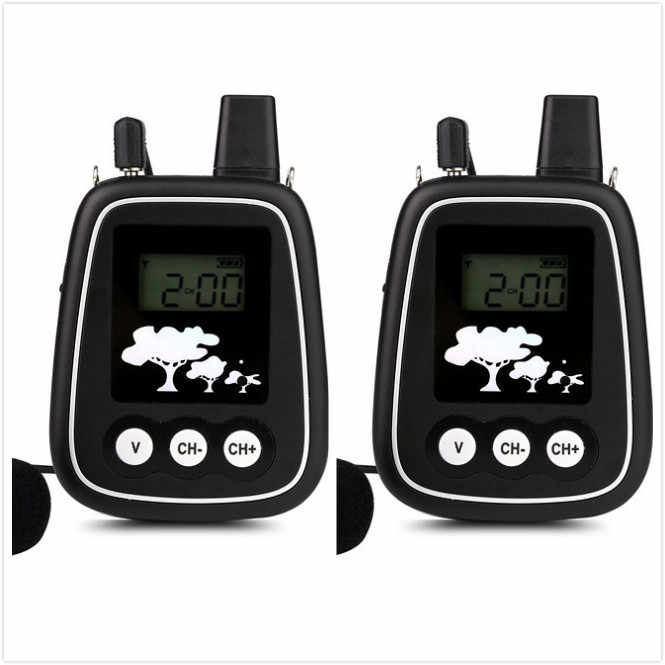
Wireless Interpretation Systems for International Tours and Events
Wireless Interpretation Systems for International Tours and Events
International communication creates additional challenges for guided tours.
A factory may receive visitors from Europe, North America, the Middle East, and Asia.
An international conference may include participants who speak several different languages.
A tourist attraction may welcome visitors from around the world.
In these situations, a standard tour guide system may not be enough.
A wireless interpretation system can help deliver translated communication to different groups.
What Is a Wireless Interpretation System?
A wireless interpretation system allows an interpreter to listen to the original speaker and transmit a translated version to participants.
Depending on the system configuration, different languages may operate on separate channels.
Participants select the language channel they need.
For example:
Channel 1: English
Channel 2: Spanish
Channel 3: French
Channel 4: Chinese
The speaker can continue the presentation while interpreters provide real-time translation.
Where Are Interpretation Systems Used?
Wireless interpretation systems can be used for:
- International factory visits
- Conferences
- Business meetings
- Government delegations
- Trade exhibitions
- Training programs
- Academic visits
- Religious events
- International tourism
Why Wireless Interpretation Is Useful
Traditional interpretation can interrupt the flow of a presentation.
The speaker talks.
The interpreter repeats the message.
The process continues.
Wireless simultaneous or assisted interpretation can create a more efficient communication experience by allowing participants to listen through personal receivers.
Multilingual Communication in Cultural Institutions
Major museums demonstrate the importance of multilingual communication.
The British Museum’s audio experience supports multiple languages, and Louvre Abu Dhabi offers audio content in English, Arabic, French, Mandarin, Russian, German, and Hindi.
UNESCO documentation on memorial-site audio guides also describes multilingual audio experiences supporting a wide range of visitor languages.
These examples show that language accessibility is increasingly important for international audiences.
Important Features to Consider
When selecting a wireless interpretation system, consider:
Number of Language Channels
The system should support the required number of simultaneous languages.
Audio Clarity
Participants need to clearly understand the interpreter.
Channel Switching
Receivers should allow users to easily select the required language.
Battery Performance
Long events require reliable battery operation.
Scalability
Organizations may need to expand the number of receivers for larger events.
Conclusion
Language should not become a barrier to communication.
A wireless interpretation system can help organizations communicate more effectively with international audiences.
Whether used for a factory visit, conference, training session, or guided tour, the right system can create a clearer and more inclusive experience for participants from different countries and language backgrounds.