What Is a Wireless Tour Guide System and How Does It Work?
Clear communication is one of the most important parts of a successful guided tour. Whether the tour takes place in a museum, factory, university, exhibition center, historic attraction, or industrial facility, visitors need to hear the guide clearly.
However, traditional voice communication has obvious limitations.
A guide may need to speak loudly in a crowded environment. Visitors standing at the back of the group may miss important information. Background noise from machines, traffic, other tourists, or large crowds can make communication even more difficult.
This is where a wireless tour guide system becomes useful.
What Is a Wireless Tour Guide System?
A wireless tour guide system is a portable communication solution designed to transmit a speaker’s voice directly to multiple listeners.
A typical system includes:
- One transmitter with a microphone for the tour guide or presenter
- Multiple wireless receivers for visitors
- Earphones or headphones
- Rechargeable batteries or charging equipment
- Optional accessories such as charging cases, neck straps, or disposable earphones
The guide speaks into the microphone connected to the transmitter. The voice is transmitted wirelessly to the receivers carried by the participants.
Instead of trying to hear the guide from several meters away, each participant receives the audio directly through an earphone.
How Does a Tour Guide System Work?
The operating principle is simple.
First, the guide turns on the transmitter and selects the desired communication channel. Visitors then turn on their receivers and connect to the same channel.
Once the system is connected, the guide’s voice is transmitted wirelessly to the entire group.
This allows the guide to speak at a normal volume while participants listen clearly through their personal receivers.
The system can be especially useful in environments with:
- High background noise
- Large visitor groups
- Long walking distances
- Multiple tour groups operating nearby
- Machinery or production equipment
- Quiet locations where loud speaking is not appropriate
Why Are Wireless Tour Guide Systems Important?
The main advantage is communication quality.
When visitors cannot hear the guide, the overall experience becomes less effective. Important information may be repeated, questions may interrupt the presentation, and participants may become disengaged.
A wireless communication system helps create a more organized experience.
The guide does not need to shout.
Visitors do not need to crowd around the speaker.
The group can move more naturally through the tour environment.
This is particularly useful for professional factory visits, where visitors may need to follow safety rules while still receiving detailed explanations about equipment, production processes, and quality control procedures.
Common Applications
Wireless tour guide systems are used in many industries.
Factory Tours
Manufacturing environments can be extremely noisy. Machinery, ventilation systems, production lines, and transportation equipment can make normal conversation difficult.
A wireless system allows visitors to hear explanations about the manufacturing process without requiring the guide to stop repeatedly or raise their voice.
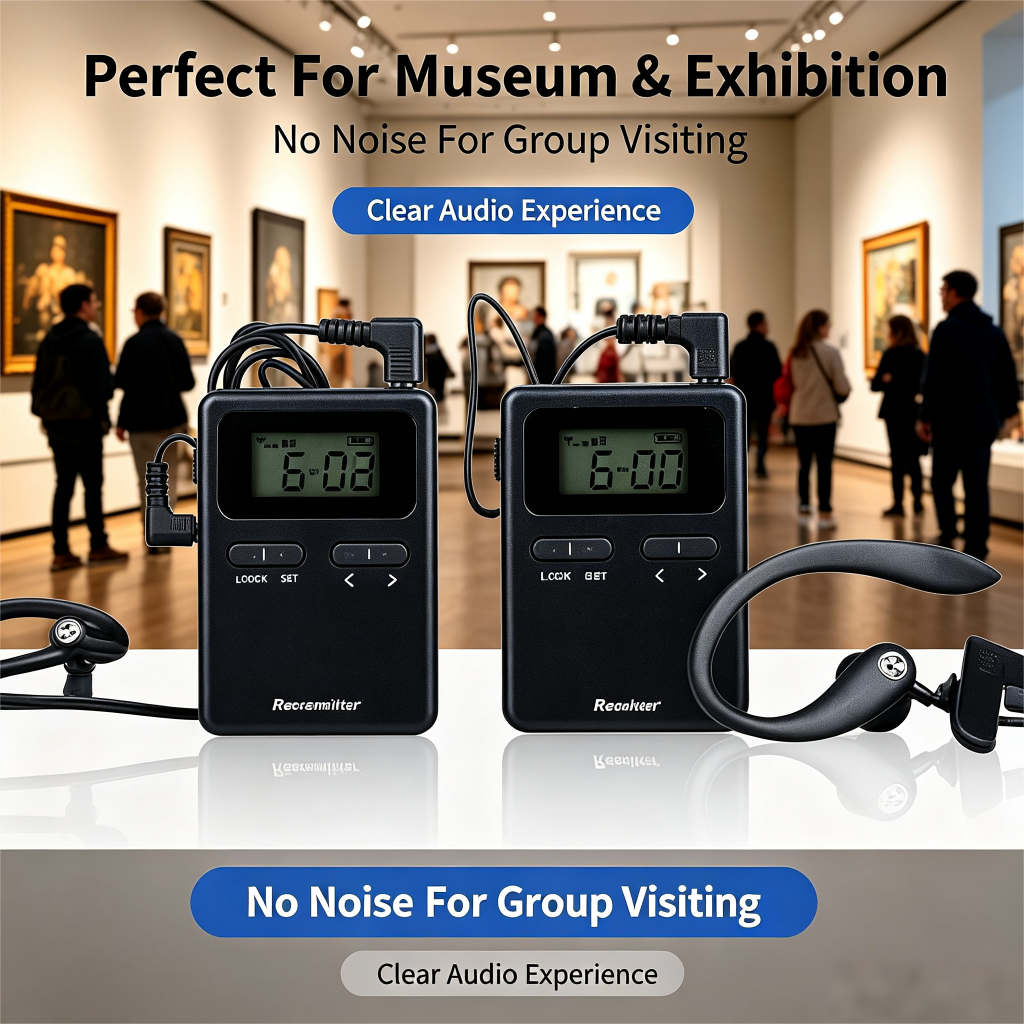
Museums and Cultural Attractions
Museums often need to balance visitor education with a quiet environment.
Audio and guide systems allow groups to receive detailed information without disturbing other visitors. Major museums continue to invest in audio-guided visitor experiences. For example, the British Museum provides expert audio commentary covering hundreds of objects and supports multiple languages.
Tourist Attractions
Tour operators often work with groups moving through busy locations.
A wireless guide system helps the group stay connected even when visitors are walking, taking photographs, or standing at different distances from the guide.
Corporate Visits
Companies frequently organize customer visits, supplier visits, training sessions, and investor tours.
A professional communication system can make the presentation more organized and easier to understand.
Important Features to Consider
When choosing a wireless tour guide system, buyers should consider several factors.
Transmission Range
The required range depends on the application. A museum tour may only require short-distance communication, while an outdoor attraction or industrial facility may require a longer transmission range.
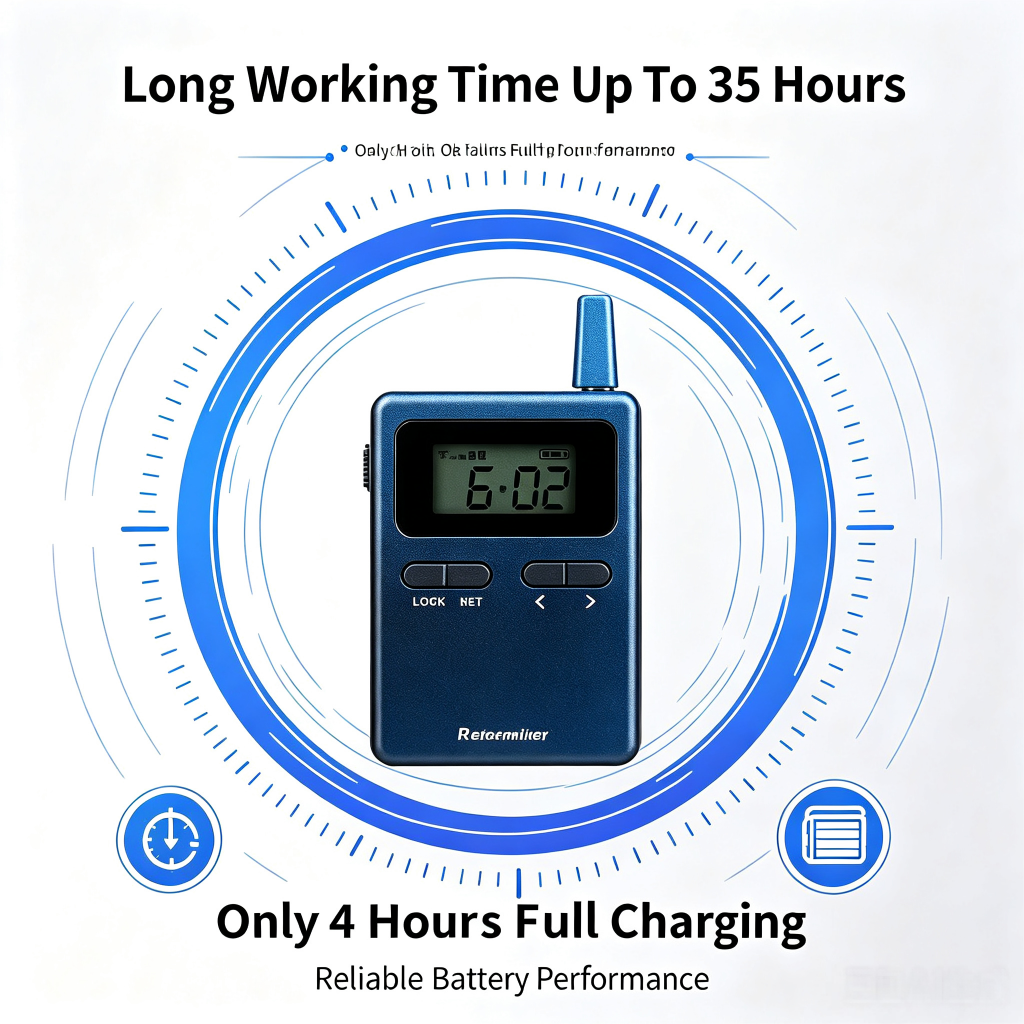
Battery Life
A system should operate for the entire duration of the tour without interruption.
Rechargeable systems can reduce the cost and waste associated with disposable batteries.
Number of Receivers
The system should support the expected group size and allow additional receivers to be added when necessary.
Sound Quality
Clear voice transmission is more important than high-volume output. The system should provide stable communication and minimize interference from surrounding noise.
Ease of Operation
Tour guides often work with visitors who have never used the equipment before.
Simple controls can reduce setup time and improve the overall experience.
The Future of Guided Communication
Guided communication is becoming increasingly flexible.
Traditional receiver-based systems continue to be widely used because they are reliable and easy to operate. At the same time, museums and attractions are also expanding the use of smartphone-based audio guides and digital content.
Louvre Abu Dhabi, for example, offers audio-guide content through its visitor app in several languages, while Louvre-Lens provides visitors with access to digital audio-guide content through their personal devices.
Despite the growth of smartphone technology, dedicated wireless tour guide systems remain important for applications where organizers need immediate communication, simple group management, and reliable operation without requiring every participant to download an application.
Conclusion
A wireless tour guide system provides a practical solution for clear group communication.
From factory tours and museums to tourist attractions and corporate visits, the technology helps guides communicate more effectively and helps participants enjoy a better listening experience.
When selecting a system, organizations should consider the operating environment, group size, required transmission range, battery life, audio quality, and ease of use.
The right system can transform a difficult communication environment into a clear, organized, and professional guided experience.